Why Your Eyes Are Burning (And It’s Not Just Screen Time)
You know that feeling when your eyes are burning, itchy, and watering all day? You blame your laptop. You blame late nights. But the actual culprit might be simpler: the air you’re breathing.
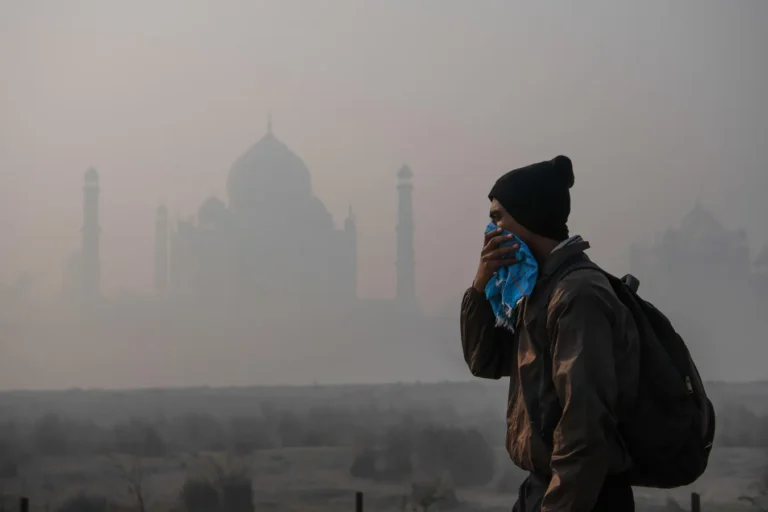
While everyone focuses on protecting their lungs with masks and air purifiers, our eyes (completely exposed organs) are taking a direct hit from pollution. And unlike your lungs, your eyes have no natural barrier against the toxic mix of exhaust fumes, construction dust, and industrial emissions floating around Indian cities.
Let’s talk about what pollution does to your eyes and what you can actually do about it.
The Problem: Your Eyes Are Completely Exposed
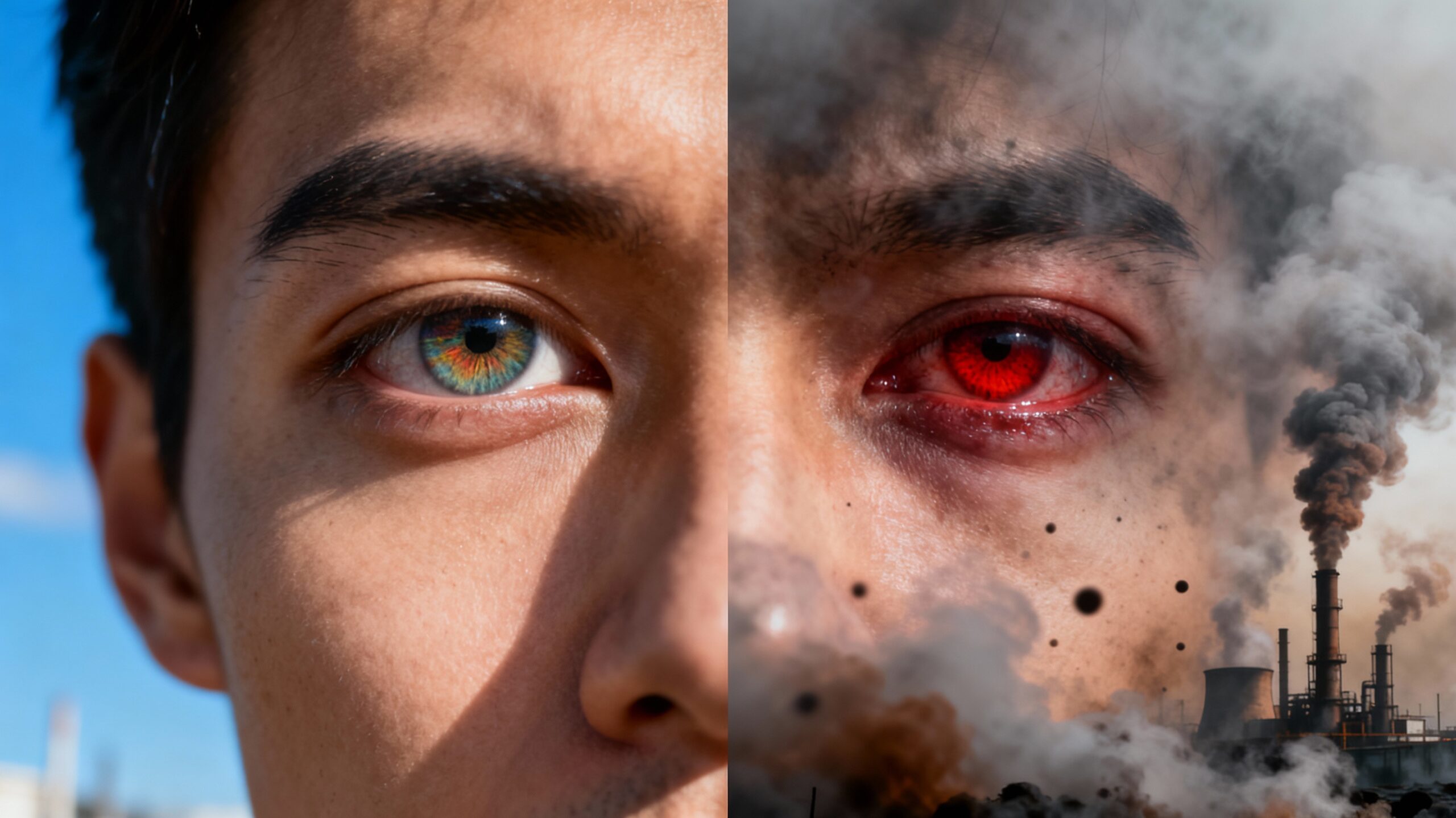
Here’s the uncomfortable truth: your eyes are fully exposed to whatever’s in the air. Unlike your lungs (protected by mucus and airways) or your skin (protected by multiple layers), your eyes have only a thin tear film standing between them and the environment.
When your city’s AQI crosses 200, your eyes are absorbing:
- PM2.5 particles: Microscopic pollutants that slip into your tear film, disrupt its stability, and trigger inflammation on your cornea
- Nitrogen dioxide (NO₂): From vehicle exhaust, increases conjunctivitis risk and causes redness
- Ozone (O₃): Irritates eye membranes and makes your tear film acidic
- Carbon monoxide, sulfur dioxide, heavy metals: A toxic mix causing everything from irritation to long-term damage like cataracts and glaucoma
The Numbers Are Alarming
Delhi hospitals have reported a 40% surge in eye-related complaints during high-pollution weeks. A national study found clear links between PM2.5 exposure and eye disease across India, with Delhi among the worst-affected cities. Long-term exposure increases your risk of cataracts and glaucoma (19% higher odds with PM2.5 exposure), age-related macular degeneration (risk doubles with high PM2.5), chronic dry eye syndrome, and visual impairment. The air you breathe today affects your ability to see tomorrow.
The Symptoms: What to Watch For
If you’re experiencing any of these regularly, pollution is likely the cause: burning or stinging sensation, persistent redness, excessive watering or very dry eyes, gritty feeling under your eyelids, constant itching, blurred vision or difficulty focusing, light sensitivity, crusty eyelids in the morning, difficulty opening eyes after sleeping. If you live in a city with AQI consistently above 150 and have these symptoms, it’s not you – it’s the air.
The Science: How Pollution Damages Your Eyes
Your tear film has three layers: lipid layer (prevents evaporation), aqueous layer (provides hydration), and mucin layer (helps tears stick to your eye). Pollution destroys this balance. PM2.5 particles penetrate the tear film and generate reactive oxygen species that damage cells, trigger inflammatory responses, acidify your tear film, and disrupt tear stability, causing chronic dry eye. Every blink spreads these particles across your cornea. Every time you rub your eyes, you grind them deeper into the tissue.
The Solutions: How to Protect Your Eyes
You don’t need to leave your city. Here are practical, science-backed ways to protect your eyes:
1. Wear Protective Eyewear – Not regular sunglasses – get wrap-around glasses or goggles that create a physical barrier. Best times: early mornings and evenings when pollution peaks.
2. Check AQI Before Going Out – If AQI is above 200, postpone outdoor activities when possible. Your eyes and lungs will thank you.
3. Use Lubricating Eye Drops – Get medically recommended lubricant drops. Use them twice daily, especially after outdoor exposure. They flush out pollutants and restore tear film stability.
4. Never Rub Your Eyes – Rubbing grinds pollutants deeper and can cause infections. Instead, rinse with clean, cool water or use lubricating drops.
5. Improve Indoor Air Quality – Use HEPA filter air purifiers in your bedroom and workspace. Keep windows closed during high-pollution hours. Clean AC filters regularly.
6. Stay Hydrated – Drink plenty of water throughout the day. Dehydration worsens dry eye syndrome.
7. Eat Eye-Healthy Foods – Load up on antioxidants (berries, leafy greens, tomatoes), omega-3s (fish, flaxseeds, walnuts), and vitamins A, C, E (carrots, citrus, nuts).
8. Wash Your Face at Night – Rinse your face and eyes with cool, clean water before bed to remove accumulated pollutants.
9. Get Annual Eye Check-Ups – If you live in a polluted city, annual eye exams are essential. Catch issues early before they worsen.
10. Limit Outdoor Time on Bad Days – Reduce outdoor exposure when pollution spikes, especially during peak hours.
The Bottom Line
Air pollution isn’t just a lung problem – it’s a direct threat to your vision. Every high-AQI day adds up. Every unprotected walk outside damages your eye health. But you’re not helpless. With protective eyewear, lubricating drops, good nutrition, clean indoor air, and regular check-ups, you can minimize the damage.
Your eyes are the only pair you’ll get. Check that AQI. Wear those glasses. Use those drops. Eat your greens. And start asking why we need to do all this just to protect our basic health.
Stay safe. Stay informed. Keep your eyes protected.